


-

- 2026-11-20
Biodegradable Chelating Agents in Lithium-Ion Battery Recycling
The recycling of lithium-ion batteries has moved from a secondary environmental ambition to a regulated industrial sector under strict European scrutiny. As gigafactories scale up, the recycling loop has to match the purity of primary extraction without creating a secondary waste stream of ammoniacal nitrogen or persistent organic pollutants. That operational demand is where biodegradable chelating agents enter the hydrometallurgical flowsheet.
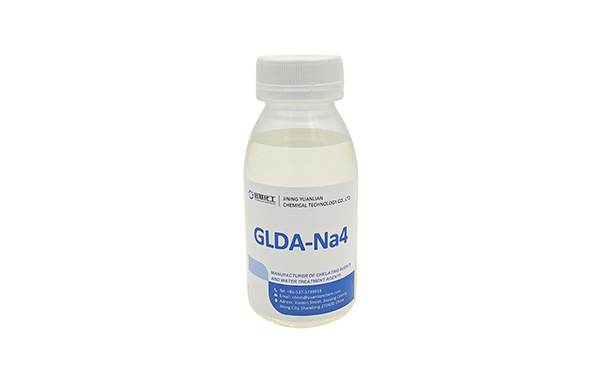
This guide is written for plant managers, procurement teams and process engineers evaluating green chemical alternatives for black-mass leaching, selective extraction and wastewater polishing. GLDA-Na4 and MGDA-Na3 are the primary products discussed, alongside related aminopolycarboxylates used in modern metal recovery circuits.
Why conventional hydrometallurgy is hitting a regulatory wall
Traditional hydrometallurgical recovery of nickel, cobalt and manganese from black mass relies heavily on mineral acids combined with ammonia, ammonium salts or legacy chelants such as EDTA. While these systems achieve high extraction efficiencies, they leave behind severe environmental liabilities.
Ammonium-based leaching circuits generate high concentrations of free ammonia in plant wastewater. Treating this effluent requires dedicated stripping units and biological nitrification-denitrification steps that increase capital expenditure and operating cost. Furthermore, regulators across Europe are tightening limits on nitrogen discharge into receiving waters.
Legacy chelants like EDTA present a different problem: their resistance to biodegradation means they persist in process water and can remobilise heavy metals from geological sinks if discharged. Under the European Union Battery Regulation, recyclers must report lifecycle carbon footprints and prove that their chemical inputs do not carry persistent toxic residues. Biodegradable chelants remove that compliance friction while maintaining the metal-holding performance required for high-purity separation.
The chemistry of black-mass leaching and metal complexation
Black mass—the shredded and calcined cathode material containing lithium, nickel, cobalt, manganese and graphite—is typically digested in an acidic medium with a reducing agent to break down the stable metal oxides.
When a biodegradable chelating agent is introduced into the leaching or subsequent separation stage, it does not replace the primary acid, but it alters the thermodynamics of metal solubility. By forming soluble, stable coordination complexes with transition metal ions, the chelant prevents premature precipitation as pH rises during neutralisation steps.
Three distinct advantages emerge in this environment:
- Enhanced selectivity at controlled pH: By stepping up the pH gradually, different metal complexes reach their stability thresholds sequentially, allowing selective precipitation or solvent extraction cuts.
- Suppression of unwanted hydrolysis: Iron, aluminium and copper impurities can be sequestered in solution while target metals are directed to crystallisation or ion-exchange columns.
- Lower corrosivity: Formulations buffered with biodegradable chelants are significantly less aggressive on reactor linings and auxiliary pipework compared to concentrated mineral acid mixtures.
Selective separation of nickel, cobalt and manganese
The economic viability of battery recycling depends on the purity of the recovered precursor salts (such as nickel sulfate and cobalt sulfate) or cathode active materials (CAM). Impurities as low as a few parts per million of copper, iron or calcium can ruin a precursor batch.
Chelating agents act as masking agents during solvent extraction (SX) or precipitation stages. For instance, in a mixed sulfate liquor containing nickel, cobalt and manganese, a targeted addition of a biodegradable chelant can suppress the co-precipitation of minor transition metal impurities when neutralising with sodium hydroxide or sodium carbonate.
The stability constants (log K values) dictate this behaviour. Transition metals bind strongly with aminopolycarboxylates in the order of copper > nickel > cobalt > iron(II) > zinc > manganese > magnesium > calcium. By exploiting these differences in binding strength, process engineers can tune the redox and pH conditions to hold specific impurities in solution while precipitating the desired metal fraction.
Stripping the liquor and regenerating the chelant
A common misconception among operators new to chelating chemistry is that the chelant is permanently consumed or locked into the metal complex. In closed-loop hydrometallurgy, the ligand can often be recovered or managed through precipitation cycles.
When the target metal is recovered—either through solvent extraction, electrowinning or selective sulphide/hydroxide precipitation—the spent liquor containing the free or weakly bound chelant can be routed back to the leaching stage or treated in a recovery loop. Because molecules like GLDA and MGDA degrade naturally if discharged, they do not accumulate in biological wastewater treatment plants downstream, avoiding the toxicity alerts associated with non-biodegradable alternatives.
The practical workflow requires bench-scale testing with your specific black-mass composition. Variations in cathode chemistry (such as the shift from NMC111 to NMC811 or high-nickel chemistries) change the minor impurity profile, which directly impacts the required chelant stoichiometry.
Environmental compliance and the EU Battery Regulation
The European Union Battery Regulation enforces strict due diligence, recycled content quotas and carbon footprint declarations. Chemical inputs are audited not only for their immediate safety but for their entire lifecycle impact.
Using readily biodegradable chelating agents (meeting OECD 301 criteria) supports the recycler's sustainability audit in three ways:
- Ecolabel and green procurement alignment: Meets corporate ESG targets for Tier-1 automotive supply chains.
- Simplified wastewater permitting: Eliminates persistent nitrogen and refractory organic carbon concerns in discharge permits.
- Reduced carbon intensity: Modern bio-based or green-route manufacturing processes for aminopolycarboxylates carry a lower carbon footprint than petrochemical-heavy legacy synthesis.
What to specify when ordering for hydrometallurgical trials
When requesting samples or commercial volumes for a battery recycling pilot, vague inquiries slow down procurement. Four parameters should be specified clearly:
- Active matter content and counter-ion: Specify whether sodium (Na) or potassium (K) salts are required, as alkali metal balance matters in downstream precipitation circuits.
- Chloride and heavy-metal impurities: Battery-grade chemicals must have ultra-low trace chloride and iron levels to prevent corrosion in titanium or high-alloy autoclaves.
- Biodegradation data: Request current OECD 301 test certificates and REACH registration dossiers for the specific tonnage band.
- Packaging and supply form: Available in liquid bulk, IBCs or dry crystalline powder depending on your dissolution mixing station.
Frequently asked questions
Can biodegradable chelants completely replace mineral acids in leaching? No. Mineral acids provide the necessary proton inventory to break down metal oxide lattices. Chelants work alongside acids to stabilise dissolved metals, prevent premature precipitation and assist in selective separation.
How do GLDA and MGDA behave in high-salinity leach liquors? They maintain high solubility in concentrated sulfate and chloride brines, though ionic strength adjustments should be verified in bench-scale trials to confirm exact complexation capacity.
Are these chelants stable in the presence of strong oxidising agents? In oxidative leaching steps (such as hydrogen peroxide or ozone addition), exposure limits must be respected, as aggressive oxidisers can gradually cleave the organic backbone. Consult our technical team for specific oxidative stability windows.
What documentation is provided with commercial shipments? Each batch includes a certificate of analysis (CoA) detailing active content, pH, density and trace metal impurities, along with SDS and regulatory compliance summaries.
For a technical specification sheet, sample delivery for a hydrometallurgical bench test, or a review of your black-mass liquor chemistry, write to [email protected] or call +86-537-3739818. Product details are listed at yuanlianchem.com.
Yuanlian Chemical specializes in the production of polyaspartic acid (PASP),tetrasodium iminodisuccinate(IDS), GLDA, MGDA etc. with stable quality and excellent quantity!

Contact us