


-

- 2025-12-05
A Guide to Choosing a Polyaspartic Acid Manufacturer
I. Introduction to Polyaspartic Acid (PASP)
Polyaspartic acid (PASP) is a biodegradable, high-molecular-weight polymer produced via chemical synthesis. It is formed by linking aspartic acid monomers through amide bonds. Its molecular backbone contains a high density of carboxyl groups, a unique structure that grants it exceptional chelating, dispersing, and scale inhibition properties.
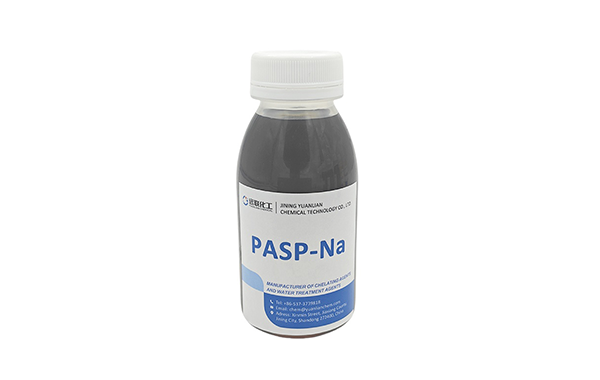
Recognised as a quintessential "green chemical", its core advantages lie in its outstanding biodegradability and environmental compatibility. According to industry standards, its biodegradation rate significantly surpasses that of traditional phosphorus-based scale inhibitors. Its degradation products are carbon dioxide, water, and nitrates, posing no risk of secondary pollution.
Key application areas include:
-
Agriculture (Primary Market): Used as a fertilizer synergist and soil conditioner, it enhances nitrogen utilisation efficiency and aids in the reclamation of saline-alkali soils.
-
Water Treatment: Employed as a scale inhibitor and dispersant, it is widely used in industrial cooling water systems, boiler water, and wastewater treatment.
-
Other Sectors: Also holds potential in areas such as eco-friendly materials, daily-use chemicals, and biomedicine.
II. Selection Guide: How to Choose a Quality Supplier
When selecting a polyaspartic acid manufacturer, price should not be the sole criterion. We recommend a comprehensive evaluation based on the following key dimensions:
Evaluation Dimension / Key Focus / Detailed Explanation & Screening Criteria
Fundamental Assurance / Compliance & Capability / Official Certifications: Possession of complete business licenses, production permits, etc. Accreditations like "High-Tech Enterprise" are advantageous.
Production Scale: Annual production capacity directly reflects supply chain stability. Inquire about annual output, number of production lines, and automation levels.
Industry Reputation: Years established, key clientele (especially well-known or listed companies), and absence of major negative publicity or legal disputes.
Core Technology / R&D & Quality Control / R&D Capability: Presence of an independent R&D centre, proportion of highly-educated R&D staff, collaborative projects with universities/research institutes, and number of patents. This is crucial for product iteration and solving specific problems.
Process Level: Core production process (e.g., thermal polycondensation, enzymatic catalysis). Different processes directly impact product molecular weight distribution and performance.
Quality Systems: Certification to quality management systems like ISO9001. Completeness of lab testing equipment (e.g., GPC for molecular weight analysis).
Product Suitability / Applicability & Customisation / Product Specifications: Clearly define key parameters: solid content/purity, molecular weight range (directly affects dispersing/controlled-release performance), pH, density. Request a Certificate of Analysis (CoA).
Application Fit: Request successful case studies in your specific field (e.g., water treatment, agricultural fertilizers). Ask for preliminary solutions or data references tailored to your specific problem (e.g., water type, fertilizer type).
Customisation Ability: Capability to adjust molecular weight, viscosity, additives, and offer pilot-scale testing services.
Service & Value / Support & Total Cost / Technical Service: Provision of free samples for testing, on-site technical guidance, formulation advice, and a responsive after-sales support mechanism.
Logistics & Packaging: Availability of various packaging options (tonne containers, IBCs, or smaller packs) based on your volume. Coverage of their logistics network to your region.
Total Cost of Ownership: When comparing unit prices, factor in dosage rates, efficacy, transport/packaging costs, and the implicit value of technical support to calculate the long-term comprehensive cost.
Eco-Friendliness & Sustainability / Environmental Credentials / Eco-Certifications: Does the product hold environmental label certifications or comply with relevant regulations (e.g., RoHS, REACH)?
Biodegradability: Request third-party test reports verifying the biodegradation rate—the core justification for its "green" status.
Production Environmental Standards: Inquire about the manufacturer's own environmental rating and waste management practices, reflecting their social responsibility and sustainability commitment.
Recommended Selection Process:
-
Define Your Requirements: Clearly determine your application area (agriculture, water treatment, etc.), required product form (liquid or solid), and key performance indicators.
-
Initial Screening: Shortlist 3-5 potential suppliers based on the dimensions above.
-
Request Samples & Testing: Obtain samples from shortlisted suppliers for small-scale trials or third-party testing to verify performance.
-
On-site Visit (For Large Volumes): If procurement volume is significant, consider visiting priority manufacturers to inspect facilities, equipment, and management practices firsthand.
-
Final Negotiation: Negotiate commercial terms once quality and service levels are confirmed.
III. Key Manufacturer Recommendations
Based on market research and public information, here are some notable manufacturers in the polyaspartic acid sector. The list is in no particular order; please align choices with your specific needs.
1. Yuanlian Chemical Co., Ltd. (Shandong)
As a company of specific interest, Yuanlian Chemical is a high-tech enterprise specialising in the R&D and production of green fine chemical products.
-
Production Scale: Total annual capacity for various green additives exceeds 6,000 tonnes, with an output value over 100 million, ensuring stable, large-scale supply.
-
Industry-Academia Collaboration: Since its founding, the company has established strong collaborative R&D partnerships with leading institutions like Nankai University, Beijing University of Chemical Technology, and Shandong Agricultural University, forming a solid technological foundation.
-
Technical Team: The R&D team is highly qualified, with over 90% holding bachelor's degrees or higher, including several senior engineers and certified professionals.
-
Technological Achievements: Has independently developed key green chemicals like Polyaspartic Acid (PASP) and Tetrasodium Iminodisuccinate (IDS).
-
Production & Products: Features highly automated production lines and diverse testing methods. Can provide customised products based on client needs. Products primarily target fertilizer synergists, water treatment agents, and additives for papermaking and textile dyeing.
-
Company Ethos: Positions itself as a provider of "holistic solutions for green chemical transformation," focusing not just on product sales but on delivering added-value services to clients.
2. Shandong Yanghua Co., Ltd.
-
Market Position: According to multiple market reports, Shandong Yanghua is frequently cited as a leading domestic producer of polyaspartic acid (salts), holding a significant market share and strong reputation in the water treatment chemicals industry.
-
Product Application: Its sodium polyaspartate products are widely used in industrial water treatment, oilfields, fertilizers, and other sectors. The company likely offers a comprehensive product range covering industrial to higher-grade specifications.
-
Consideration Tip: A key candidate to evaluate for demanding applications in water treatment, especially for complex systems like industrial cooling water or oilfield injection water.
3. Other Market Participants
-
International Leaders: Companies like BASF and Lanxess possess deep technological expertise and stringent product standards, holding major global market shares. Suitable for projects with extremely high specifications, ample budget, or international scope.
-
Specialised Domestic Producers:
-
Companies like Desai Chemical, Tianjin Keweijinhong Environmental Technology, etc., are also listed in reports as important players, potentially holding advantages in specific regions or niche applications.
-
Firms such as Zhongnong Xingting (Beijing) Biotechnology focus more on agricultural applications of polyaspartic acid, using it as a core component in fertilizer efficiency enhancement.
-
Summary & Recommendations
The polyaspartic acid market is in a growth phase. Choosing the right supplier is crucial for ensuring performance and economic return.
-
If your needs are in agricultural synergists/multi-purpose green additives and you value R&D strength rooted in industry-academia collaboration, Yuanlian Chemical is a compelling option to prioritise for engagement and deeper assessment.
Yuanlian Chemical specializes in the production of polyaspartic acid (PASP),tetrasodium iminodisuccinate(IDS), GLDA, MGDA etc. with stable quality and excellent quantity!

Contact us