


-

- 2026-04-03
Why Biodegradable Chelants Are the Inevitable Choice for Modern Agriculture
In the precision agriculture landscape of 2026, the success of a crop is no longer measured solely by yield, but by the Environmental Integrity of the inputs used to achieve it. For decades, EDTA (Ethylenediaminetetraacetic acid) has been the "industry standard" for micronutrient delivery. However, its chemical persistence is now a liability.
As global soil health initiatives and the EU’s "Farm to Fork" strategy reach critical milestones, the transition to Green, Biodegradable Chelating Agents is no longer a luxury—it is a functional necessity for the future of farming.
1. The Environmental Debt of EDTA: A Persistent Legacy
The primary reason EDTA is facing a global phase-out in advanced agricultural markets is its total lack of biodegradability.
-
Heavy Metal Remobilization: EDTA persists in the soil indefinitely. This allows it to bind with heavy metals like Lead () or Cadmium (), making them mobile and increasing the risk of crop toxicity and groundwater contamination.
-
Microbial Disruption: Continuous application leads to a buildup of synthetic residues that can suppress the natural biological activity of the rhizosphere, ultimately degrading soil structure over time.
2. The Technological Superiority of Biodegradable Alternatives
2026 data confirms that "Green" alternatives like GLDA, PASP, and IDS are not just eco-friendly; they are technically superior in demanding soil conditions.
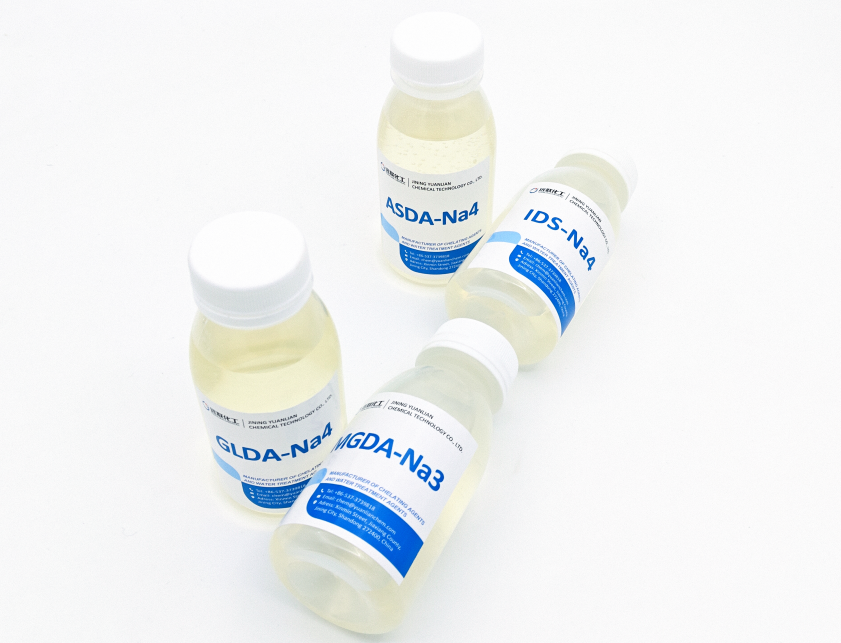
A. GLDA (Tetrasodium Glutamate Diacetate)
Derived from natural L-glutamic acid, GLDA is the high-performance workhorse for alkaline and calcareous soils.
-
pH Resilience: GLDA maintains a high stability constant for Zinc () and Iron () even at pH levels up to 12, where EDTA often fails.
-
Rapid Mineralization: It is readily biodegradable (OECD 301B), breaking down into harmless organic nutrients within weeks.
B. PASP (Polyaspartic Acid)
PASP functions as a bio-mimetic polymer that serves as a powerful Fertilizer Synergist.
-
Nutrient Anchoring: Its high carboxyl content creates a "nutrient reservoir" around the roots, preventing nitrogen leaching and phosphorus fixation.
-
Root Bio-stimulation: PASP has been proven to increase root hair density, leading to a 10–15% increase in overall nutrient uptake.
C. IDS (Tetrasodium Iminodisuccinate)
IDS is a versatile, phosphorus-free stabilizer that excels in preventing scale in irrigation systems while remaining completely safe for aquatic ecosystems.
3. The 2026 Economic Reality: ROI Over Compliance
The shift toward biodegradable agents is driven by the Return on Investment (ROI) of high-efficiency farming:
4. Conclusion: Defining the Next Decade of Agricultural Excellence
Rejecting EDTA is not just an environmental statement; it is a commitment to the long-term productivity of the land. By adopting GLDA, PASP, and IDS, fertilizer manufacturers and growers are protecting their most valuable asset—the soil—while meeting the strict "Zero-Pollution" standards of 2026.
The future of agriculture belongs to those who recognize that a healthy ecosystem is the most powerful engine for high-yield productivity.
Yuanlian Chemical specializes in the production of polyaspartic acid (PASP),tetrasodium iminodisuccinate(IDS), GLDA, MGDA etc. with stable quality and excellent quantity!

Contact us