


-

- 2026-04-16
Boosting Detergency: How Chelants Synergize with Surfactants
In the science of cleaning, the ultimate goal is the efficient removal of hydrophobic soils from surfaces. While surfactants are the "engines" of soil removal, their power is often neutralized by an invisible enemy: Water Hardness.
To maintain peak cleaning performance, especially in the 2026 era of "Compact" and "Eco-friendly" formulations, the strategic use of chelating agents like GLDA and MGDA is essential. These agents do not just "soften" water; they act as performance multipliers for the entire detergent system.
1. The Antagonism: How Hard Water "Kills" Surfactants
Water hardness is primarily composed of dissolved Calcium () and Magnesium () ions. When these divalent cations encounter anionic surfactants (such as LAS or AES) in a wash liquor, a destructive chemical reaction occurs:
-
Precipitation (Scum Formation): Calcium ions react with anionic surfactants to form insoluble "metallic soaps." This turns the active cleaning agent into a waxy precipitate (scum), which not only fails to clean but can redeposit onto the fabric or surface.
-
Loss of Micelle Efficiency: Even if precipitation doesn't occur, the presence of hardness ions shrinks the electrostatic "shield" of surfactant micelles, making it harder for them to emulsify oils and fats.
2. The Solution: The "Caging" Mechanism of Chelating Agents
Chelating agents (from the Greek word chele, meaning "claw") function by wrapping around metal ions to form stable, water-soluble complexes.
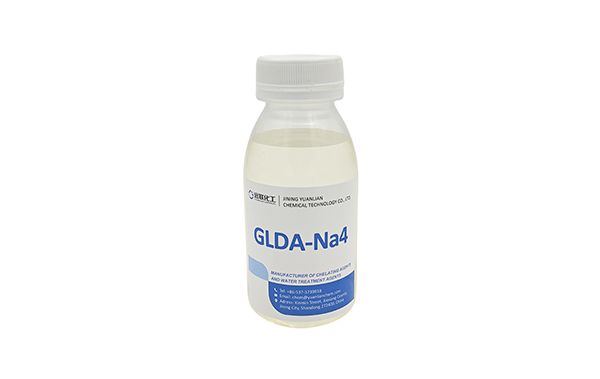
When a chelant like GLDA (Tetrasodium Glutamate Diacetate) is introduced:
-
Ion Sequestration: The chelant's multiple "claws" (carboxylic acid groups) seize and ions.
-
Inactivation: Once "caged" within the chelate ring, these ions can no longer interact with the surfactants or the soil.
-
Solubilization: The resulting complex is highly soluble, ensuring the hardness ions stay in the water phase and are rinsed away.
3. The Synergy: How Chelants Empower Surfactants
The relationship between chelants and surfactants is synergistic, meaning their combined effect is greater than the sum of their parts.
A. Protecting the Active Matter
By removing the "interference" of metal ions, chelants ensure that 100% of the surfactant molecules remain available for cleaning. This allows formulators to reduce the total surfactant dosage—a key strategy for cost optimization and sustainable formulation.
B. Lowering the Critical Micelle Concentration (CMC)
Chelating agents help surfactants form micelles at lower concentrations. By managing the ionic strength of the wash liquor, chelants facilitate a more rapid transition of surfactants from the bulk water to the oil-water interface.
C. Soil Peptization and Dispersing
Chelants do more than just capture ions; they also help break down complex soils (like clay or particulate dirt) by removing the multivalent "ion bridges" that hold soil particles together. This makes it easier for surfactants to lift and suspend the dirt.
4. Choosing the Right Partner: 2026 Industry Benchmarks
As global regulations phase out persistent chemicals like EDTA and phosphates, the focus has shifted to Green Chelants that maintain high stability constants without environmental toxicity.
Conclusion: Engineering Superior Cleaning
Boosting detergency is a matter of removing the chemical obstacles to surfactant performance. By integrating high-performance, biodegradable chelants like GLDA and MGDA into your formulations, you ensure that Calcium and Magnesium ions are neutralized before they can compromise your product's power.
At Yuanlian Chemical, we provide the high-purity upstream chelants required to create the next generation of high-performance, eco-compliant detergents.
Yuanlian Chemical specializes in the production of polyaspartic acid (PASP),tetrasodium iminodisuccinate(IDS), GLDA, MGDA etc. with stable quality and excellent quantity!

Contact us