


-

- 2026-07-21
Formulation Stability and Scalp Care Compatibility in Shampoos: The Technical Role of GLDA
1. Legislative Trajectories and Clean Beauty Standards in European Hair Care
European personal care formulation has entered a phase of accelerated regulatory adaptation. The European Chemicals Agency (ECHA) continues to scrutinise persistent aminocarboxylates—disodium and tetrasodium EDTA—under REACH, while NTA carries a GHS Category 2 carcinogen classification that makes it incompatible with EU Ecolabel and COSMOS certification frameworks.
The Clean Beauty movement, now mainstream across the UK, Germany, and France, is driving additional pressure. Consumers increasingly interpret “persistent” as “unacceptable.” Consequently, formulators transitioning to plant-derived, readily biodegradable chelating agents such as GLDA are not merely responding to regulations—they are securing market access for premium hair care products. GLDA aligns directly with EU Ecolabel, Nordic Swan, and COSMOS standards while maintaining scalp barrier integrity under weakly acidic wash conditions (pH 4.5–6.0).
2. Physico-Chemical Profile and Dermatological Safety of GLDA
GLDA (tetrasodium glutamate diacetate; CAS 51981-21-6) is derived from L-glutamic acid, a naturally occurring amino acid produced via fermentation from plant-based feedstocks. The molecular structure contains two acetate arms attached to a glutamate backbone, forming stable chelate rings with metal ions through multiple coordination sites.
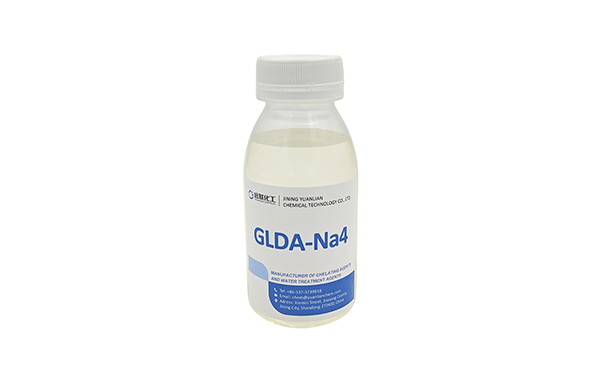
Chelation stability in weakly acidic pH. The conditional stability constants for GLDA metal complexes follow the order Cu²⁺ > Fe³⁺ > Zn²⁺ > Ca²⁺ > Mg²⁺. Under scalp-matched pH 5.0–6.0, GLDA maintains high association constants with transition metals while remaining fully soluble. This contrasts with certain inorganic or citrate-based chelates that exhibit temperature-dependent precipitation in acidic surfactant matrices.
Dermatological compatibility. GLDA is non-sensitising and non-irritating in standard dermatological tests. It carries no hazard classification under EU CLP and is compatible with sulfate-free, sensitive scalp, and baby care formulations.
3. Strategic Application Performance Profiles in Shampoo Formulations
Preservative Synergy and Dose Optimization
GLDA functions as a preservative booster through a well-documented mechanism: it chelates calcium and magnesium ions required for microbial cell wall integrity, compromising outer membrane stability in Gram-negative bacteria and fungi. When incorporated at 0.1–0.5% active, GLDA enables formulators to reduce phenoxyethanol, organic acids, or other preservatives by measurable margins while maintaining preservative challenge test compliance.
Hard Water Shielding and Color Protection
In hard water regions (calcium carbonate exceeding 250 mg/L as CaCO₃), metal ions precipitate anionic surfactants, reducing foam volume and leaving mineral deposits on hair fibres. GLDA sequesters Ca²⁺ and Mg²⁺ before they interact with surfactants, preserving lather performance and rinsing efficiency.
For color-treated hair, copper ions (Cu²⁺) from tap water—often introduced through domestic plumbing—deposit onto the hair surface. Under UV exposure, these ions catalyse free radical generation, accelerating oxidative dye fading and keratin degradation. GLDA's high stability constant for Cu²⁺ makes it an effective copper sequestrant, addressing a concern that inorganic builders or weaker organic chelates cannot resolve.
Oxidation Prevention in Natural Oils and Fragrances
Plant-derived oils, botanical extracts, and essential oils introduce trace transition metals (iron, copper) that catalyse autoxidation of unsaturated fatty acids. This manifests as rancidity, colour shift, or fragrance degradation over shelf life. GLDA suppresses metal-catalysed oxidation by forming inactive complexes with these pro-oxidant metal ions, preserving both product aesthetics and functional integrity.
4. Technical Benchmarks: GLDA vs. Legacy Hair Care Complexes
| Characterisation Parameter | GLDA-Na4 | Disodium EDTA | Sodium Citrate |
|---|---|---|---|
| Primary material base | Plant-derived (L-Glutamic acid) | Fossil-fuel / petrochemical | Plant-derived organic acid |
| Ultimate biodegradability (OECD 301B) | Readily biodegradable (>60% in 28 days) | Persistent in environment (<10%) | Readily biodegradable |
| Chelation stability (pH 5.0–6.0, Cu²⁺) | High and stable | Very high | Moderate / temperature dependent |
| Preservative boosting synergy | High | High | Low |
| Scalp irritation & ecotoxicity profile | Non-hazardous / hypoallergenic | Low / aquatic toxicity concerns | Non-hazardous |
5. Aligning Global Supply Chains with Yuanlian Chemical Engineering Standards
European hair care multinationals and contract manufacturers evaluating chelate upgrades typically focus on two technical parameters beyond basic performance: lot-to-lot reliability of active substance distribution and control of environmental trace impurities—particularly free NTA content, which is restricted under EU Ecolabel criteria.
Yuanlian Chemical operates as an upstream synthesis innovator in the green chelate space. Its manufacturing process for GLDA-Na4—available in 47% active liquid form—achieves consistent analytical profiles with low impurity distribution, meeting INCI safety standards and REACH registration requirements. Batch-specific Certificates of Analysis and full regulatory documentation support the supply chain traceability required for multinational procurement audits.
6. Collaborative Engineering Support and Product Verification
Adopting biodegradable chelating ligands is not solely a compliance measure—it is a pathway to establishing ecological differentiation as a technical barrier to competition in the premium hair care segment.
To evaluate the phase compatibility, foam density profiles, or preservative boost ratios of GLDA within your trial shampoo formulations, standard evaluation samples, comprehensive Technical Data Sheets (TDS), and Safety Data Sheets (SDS) are accessible through our application engineering group.
Yuanlian Chemical specializes in the production of polyaspartic acid (PASP),tetrasodium iminodisuccinate(IDS), GLDA, MGDA etc. with stable quality and excellent quantity!

Contact us