


-

- 2026-07-31
Iminodisuccinic Acid and Its Sodium Salt: A Practical Guide to a Biodegradable Chelating Agent
Introduction
For anyone working in detergents, water treatment, or industrial cleaning, the pressure to move away from persistent chelating agents like EDTA is real. EDTA works well, but it doesn't break down in the environment, and regulators are increasingly uncomfortable with that.
Iminodisuccinic acid (IDS) and its sodium salt are among the alternatives that have been getting more attention over the past couple of decades. The chemistry is straightforward—it's an aminopolycarboxylate chelating agent with a structure similar to EDTA but with a key difference: it biodegrades.
This guide covers what IDS is, where it works well, where it doesn't, and what to look for when sourcing it.
1. Chemical Identity and Basic Properties
CAS Numbers and Synonyms
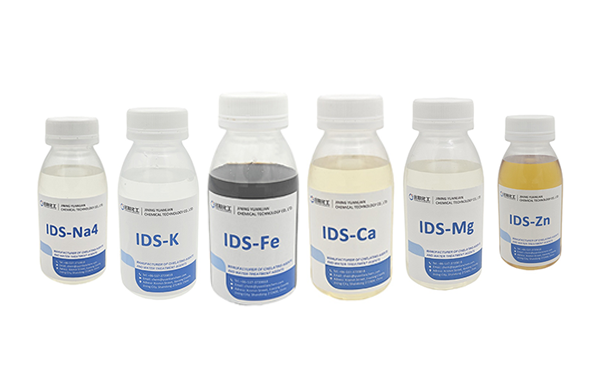
| Property | Detail |
|---|---|
| Tetrasodium iminodisuccinate CAS | 144538-83-0 |
| Molecular formula | C₈H₇NNa₄O₈ |
| Molecular weight | 337.10 g/mol |
| Common names | Iminodisuccinic acid (IDS), iminodisuccinate tetrasodium salt, sodium iminodisuccinate |
The acid form and the sodium salt are often used interchangeably in technical literature, though commercial products typically ship as the tetrasodium salt solution.
How It's Made
IDS is produced from maleic anhydride, water, sodium hydroxide, and ammonia. The synthesis runs in aqueous solution without organic solvents, and the only byproduct is ammonia, which can be recovered and recycled.
This matters because traditional aminocarboxylate chelators like EDTA are made using formaldehyde and hydrogen cyanide—substances that carry significant toxicity risks during manufacturing. The IDS route avoids those hazards entirely. The process also received a US EPA Presidential Green Chemistry Challenge Award in 2001, which gives some indication of its standing in the industry.
The reaction yields a mixture of stereoisomers: about 25% S,S-IDS, 25% R,R-IDS, and 50% of the meso forms.
2. Key Properties
Biodegradability
This is where IDS separates itself from EDTA. Standard OECD 301 tests show that IDS is readily biodegradable, while EDTA persists in conventional wastewater treatment systems. One study found IDS degradation over 28 days was roughly 4.5 times higher than EDTA, and its ecotoxicity thresholds for aquatic organisms were substantially higher—meaning it's significantly less harmful to aquatic life.
The concern with EDTA persistence isn't just academic. Because EDTA doesn't break down and stays highly soluble in water, it can mobilize heavy metals from sediments into drinking water supplies. IDS avoids that long-term risk profile.
Chelating Performance
IDS is considered a medium-strength chelator. It forms stable complexes with calcium, copper, and iron(III) through its four carboxylate groups and the nitrogen atom, with the sixth coordination site occupied by a water molecule.
In soil remediation applications, IDS removed 25% to 35% of copper in leaching tests, with lower pH improving removal rates. It performed better on copper than on cadmium in those specific tests. In pilot-scale soil washing experiments, however, IDS was found to be less efficient than EDTA for total lead and zinc removal, and researchers noted that IDS didn't precipitate from process solutions, which actually reduced its recyclability.
3. Applications
The use cases for IDS overlap significantly with EDTA's applications, with the main driver being the need for a biodegradable option.
Detergents and Cleaning Products
IDS functions as a builder—softening water by chelating calcium and magnesium ions, which improves surfactant performance. It also stabilizes hydrogen peroxide in bleach formulations. The household and industrial cleaning sector is a major end-user.
Pulp and Paper
IDS is used in hydrogen peroxide bleaching sequences as a stabilizer. Studies on eucalyptus and bagasse pulps have established optimal conditions for IDS as a pretreatment chelator before the bleaching stage.
Agriculture
Micronutrient fertilizers often rely on chelating agents to keep iron, copper, and zinc soluble and available to plants. IDS and iminodisuccinic acid have been evaluated as biodegradable carriers for these nutrients. In soybean trials, formulations containing IDSA (iminodisuccinic acid) with copper, molybdenum, or iron influenced plant height, pod numbers, and seed yield, though effects varied by treatment.
Industrial Water Treatment
IDS serves as a scale inhibitor and corrosion inhibitor in boiler and cooling water systems. It's also used in oilfield applications for its chelating properties.
Emerging Applications
Recent research has explored loading iminodisuccinic acid onto defective UiO-66 metal-organic frameworks to create adsorbents for removing lead, copper, and cadmium from water. The IDSA-functionalized material achieved adsorption capacities of up to 377 mg/g for lead and retained over 75% of its performance after five regeneration cycles.
IDS has also been studied as an enhancer for iron-manganese desulfurization systems in coke oven gas treatment.
4. Performance Comparisons with EDTA and GLDA
The data on how IDS stacks up against alternatives is mixed, and it's worth being upfront about that.
In copper removal from contaminated soil, IDS removed roughly 25% to 35% of copper in one study—lower than EDTA's performance but enough to be considered a workable alternative in certain contexts. Combining IDS with GLDA in a 4:6 ratio yielded removal rates for cadmium and copper that were comparable to EDTA, suggesting that blended formulations may bridge the performance gap.
However, a pilot-scale soil washing study that compared EDTA against IDS, GLDA, and EDDS found that EDTA outperformed the biodegradable options across most process parameters, including extraction efficiency and soil property impacts. IDS was described as "inefficient" for lead and zinc removal in that particular setup, though all chelators were effective at removing the easily-available metal fractions.
The takeaway is that IDS is not a universal drop-in replacement for EDTA. It works well where moderate chelating strength is sufficient—detergent builders, bleach stabilizers, certain water treatment applications. For heavy metal extraction, the choice depends on the specific metal, soil conditions, and whether you're optimizing for removal efficiency or environmental profile.
5. Sourcing and Supplier Landscape
Production Capacity
China accounts for over 70% of global IDS production, with manufacturing concentrated in Shandong, Jiangsu, and Jiangxi provinces. Major industrial zones in Zibo (Shandong) and Zhangjiagang (Jiangsu) offer integrated supply chains and port access for export.
Key Manufacturers
Based on verified supplier data:
| Company | Location | Review Score | Response Time | On-Time Delivery |
|---|---|---|---|---|
| Jiujiang Lanzo New Material Technology Co., Ltd. | Jiangxi | 5.0/5.0 | ≤3h | 100% |
| Wuxi Lansen Chemicals Co., Ltd. | Jiangsu | 5.0/5.0 | ≤5h | 90.9% |
| Qingdao Shellight Biotechnology Co., Ltd. | Shandong | 5.0/5.0 | ≤1h | 100% |
| Shandong Richnow Chemical Co., Ltd | Shandong | 4.9/5.0 | ≤3h | — |
| Jinan Mtl Chemical Co., Ltd. | Shandong | 4.6/5.0 | ≤1h | 98.6% |
What to Verify Before Purchasing
For B2B buyers, a few points are worth confirming before placing an order:
Certifications: ISO 9001, ISO 14001, and REACH registration for EU-market products. These are basic requirements for any serious supplier.
Batch documentation: Request Certificates of Analysis for each batch. These should include active content (typically 95%+ for powder grades), heavy metal limits, and impurity profiles.
Sample testing: Independent lab verification of chelating performance against your specific application is advisable before scaling up.
MOQ and packaging: Large manufacturers like Wuxi Lansen typically require 5–20 ton minimums, while others accept smaller orders around 500kg–1 ton. Packaging usually includes 25kg drums or custom configurations.
6. Storage and Handling
IDS tetrasodium salt typically ships as an aqueous solution. Storage recommendations vary by supplier, but common guidelines include keeping containers sealed in a cool, dry area and avoiding exposure to high temperatures.
Safety data sheets describe IDS as having low acute toxicity, but standard PPE—gloves, safety glasses, and protective clothing—is recommended when handling the concentrated solution or powder forms.
7. Limitations to Be Aware Of
A few practical constraints are worth noting:
Recyclability: Unlike some chelators, IDS does not readily precipitate from process solutions, which can complicate recovery and reuse in closed-loop systems.
Performance ceiling: In demanding applications requiring strong, persistent chelation—such as certain soil remediation scenarios—IDS may not match EDTA's performance.
Cost: While production costs were estimated at around 8,500 RMB per ton in 2005 pricing (for a 34% solution), current market pricing varies by purity, volume, and supplier. Premium grades with enhanced testing and traceability may command 15–20% higher prices.
Conclusion
Iminodisuccinic acid and its sodium salt represent a genuine effort to address the environmental persistence problem that has plagued traditional chelating agents. The manufacturing process avoids toxic feedstocks, the product biodegrades at a meaningful rate, and the chelating performance is sufficient for a wide range of commercial applications.
Whether IDS is the right choice depends on the application. For detergent builders, bleach stabilizers, and general water softening, it's a viable alternative that reduces environmental footprint. For heavy metal extraction, the data suggests a more careful evaluation—it may work, but the specific conditions and metals matter a great deal.
What's clear is that the market is shifting. With production concentrated in China and growing regulatory interest in biodegradable alternatives, IDS is likely to remain an important option for formulators and procurement teams looking to balance performance with sustainability commitments.
Yuanlian Chemical specializes in the production of polyaspartic acid (PASP),tetrasodium iminodisuccinate(IDS), GLDA, MGDA etc. with stable quality and excellent quantity!

Contact us