


-

- 2026-08-03
GLDA-Na4 Biodegradable Chelating Agent: Your Practical Alternative to EDTA
Finding a chelating agent that meets Europe's tightening environmental rules does not need to be difficult. GLDA-Na4 (Tetrasodium Glutamate Diacetate) is a biodegradable chelating agent that delivers the same performance you expect from EDTA. Made from plant-based L-glutamic acid, it breaks down quickly in natural conditions while offering strong metal ion control across many applications. For procurement managers and R&D teams across the EU, this biodegradable chelating agent ticks both the performance box and the compliance box in one move.
Formulators in home care and personal care have already started making the switch to this biodegradable chelating agent. The reason is straightforward: the EU Detergents Regulation (EC 648/2004) and REACH requirements keep pushing manufacturers away from chelating agents that persist in the environment. P&G, Unilever, and Henkel have all publicly committed to moving away from traditional chelators. You need a product that delivers results today and keeps you compliant tomorrow.
Why European Formulators Pick GLDA-Na4 Over EDTA
EDTA did its job well for decades. Now its poor biodegradability creates more problems than it solves. Environmental agencies across Europe treat EDTA with growing concern, from the ECHA to national regulators in Germany, France, and the Netherlands. Wastewater plants cannot remove it effectively. It hangs around in the environment for far too long.
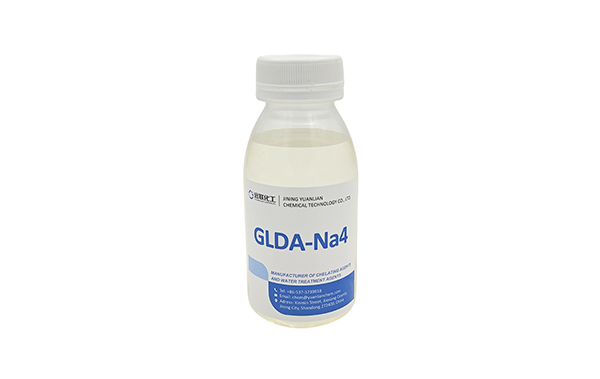
GLDA-Na4 flips this equation. It biodegrades by more than 60 per cent within 28 days under OECD 301D testing. That alone places it in a completely different regulatory category. The real win is that you do not give up performance to go green.
Here is a side-by-side look at what matters for your formulation work:
|
Property |
GLDA-Na4 |
EDTA |
Impact on your formulation |
|
Biodegradability (28 days) |
>60% (OECD 301D) |
<10% |
Meets EU eco-label rules; no regulatory headache |
|
Calcium chelation (mg CaCO3/g) |
550 |
350 |
Less product needed for the same result |
|
pH stability range |
2 to 13 |
3 to 11 |
Works in strong alkaline cleaners and acidic formulas |
|
Thermal stability |
Stable to 170 deg C |
Breaks down above 120 deg C |
Safe for hot-fill lines and high-temp cleaning |
|
Raw material origin |
Plant-based (L-glutamic acid) |
Petrochemical |
Supports your sustainability story |
GLDA-Na4 Technical Performance Data
You want hard numbers, not marketing talk, when you assess a new chelating agent for your formula. Here is what the testing tells us about this biodegradable chelating agent.
Chelation Capacity Across Common Problem Ions
The chelating power of GLDA-Na4 shifts with the metal ion type and the pH of your system. It handles calcium and iron particularly well, the two ions that cause the most grief in detergent and cleaning work. Under hard water, it locks calcium and magnesium away so they cannot form scale or disrupt your surfactants. Your product cleans better as a direct result.
Thermal Stability: Proven to 170 Degrees Celsius
GLDA-Na4 keeps its structure together where other chelating agents fall apart. Thermogravimetric analysis confirms zero breakdown after six hours at 170 degrees Celsius. The product also stays stable through a full week at 150 degrees Celsius. When the test team ran head-to-head comparisons against other chelating agents at 100 degrees Celsius, GLDA-Na4 came out ahead. For a biodegradable chelating agent to hold up under these conditions is not common. This matters for industrial cleaners that run hot, for hot-fill production lines, and for warehouses in warmer regions where storage temperatures can spike.
Preservative Synergy You Can Actually Measure
Formulators often overlook this feature, but it carries real commercial weight. The natural amino acid structure in GLDA-Na4 binds more tightly to microbial cell walls than synthetic chelators do. This binding throws off the cells' electrolyte balance and slows their activity. The practical outcome? You can cut preservative usage by 20 to 80 per cent in many formulations.
One test combined GLDA-Na4 with imidazolidinyl urea against Pseudomonas aeruginosa. The result: a 50 per cent drop in the preservative dose needed when GLDA-Na4 was in the mix. For a brand wanting to shorten its INCI list or reduce preservative costs, this is a genuine edge over competitors.
Where GLDA-Na4 Delivers the Most Value
GLDA-Na4 works in more places than just laundry powders. These applications show the strongest current demand based on market data.
Automatic Dishwashing Detergents
European shoppers want spot-free glasses and clean plates from every wash. Hard water minerals leave films and spots that ruin that experience. GLDA-Na4 handles these metal ions at the high temperatures and alkaline levels common in dishwashing. It also gets along with enzymes and bleaches without breaking them down, so you can drop it straight into current formulations.
Industrial and Institutional Cleaning
Food processing plants, commercial kitchens, and factories need cleaning agents that strip away calcium scale, rust, and protein soils under tough conditions. The high pH systems used in industrial cleaning often cause solubility trouble for standard chelating agents. GLDA-Na4 dissolves fully and stays active across the whole pH range. Your product works consistently no matter what cleaning scenario it faces.
Personal Care Formulations
Shampoos, body washes, and skincare products run into a different problem. Metal ions in tap water react with surfactants, kill foam, and leave residues on hair and skin. GLDA-Na4 stays gentle enough for leave-on products and shows no skin or eye irritation in standard tests. It also helps keep your product clear over its shelf life. It works as a metal ion control agent without adding extra steps to your formulation process.
Agricultural Micronutrient Delivery
GLDA-Na4 binds essential trace elements like iron, zinc, and copper for foliar sprays and soil use. Plants get access to these nutrients without the environmental hangover linked to EDTA-based fertilisers. With the EU Farm to Fork Strategy driving demand for greener agricultural inputs, choosing a biodegradable chelating agent over EDTA gives your fertiliser products a clear regulatory edge.
How to Source GLDA-Na4 for Production
Look past the price per kilogram when you pick a GLDA-Na4 supplier. Product consistency, technical support, and reliable delivery matter far more over the long run. A dependable biodegradable chelating agent supplier should offer batch-to-batch consistency and responsive technical service, not just a competitive quote.
Specifications worth checking:
The standard industrial grade ships as a colourless to light yellow liquid. You can order it at 30 per cent, 38 per cent, or 47 per cent active content. The pH runs from 10 to 12 under normal conditions. Density measures at or above 1.15 grams per cubic centimetre at 20 degrees Celsius. Packaging options cover 25-kilogram, 250-kilogram, and 1,250-kilogram plastic drums, with custom sizes on request.
Before you place an order, ask your supplier for these three documents: the Technical Data Sheet (TDS) with full specs, the Safety Data Sheet (SDS) covering handling and storage, and a Certificate of Analysis (COA) for that specific batch. A serious manufacturer hands over all three without any fuss.
Ready to Test This Biodegradable Chelating Agent in Your Formula?
The surest way to know if GLDA-Na4 fits your products is to run your own tests. Switching to a biodegradable chelating agent does not need to be a leap of faith. A proper evaluation covers chelation efficiency at your specific water hardness levels, compatibility with your current surfactant and enzyme setup, preservative synergy testing with your biocide package, and stability under your manufacturing and storage conditions.
We offer free samples of 200 to 500 grams for lab evaluation, enough to run a full formulation trial. You also get the complete technical data package and support from our application lab team. Most customers wrap up their internal testing within two to three weeks and have solid formulation data ready for their next development cycle.
Contact us at [email protected] or call +86-537-3739818 to talk through your requirements and get your sample shipped.
Yuanlian Chemical specializes in the production of polyaspartic acid (PASP),tetrasodium iminodisuccinate(IDS), GLDA, MGDA etc. with stable quality and excellent quantity!

Contact us