


-

- 2026-08-14
GLDA-Na4 Manufacturer: Tetrasodium Glutamate Diacetate for Cleaner Formulations
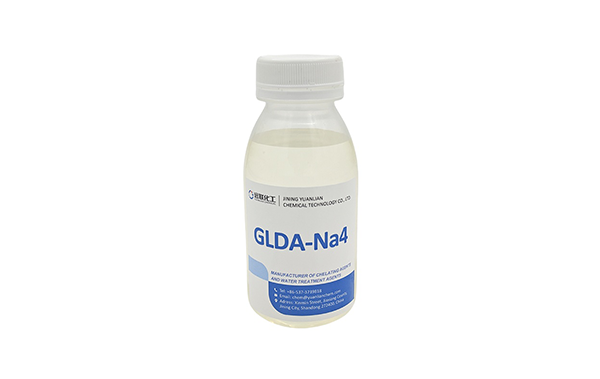
A GLDA-Na4 manufacturer earns its place on your approved supplier list by solving two problems at once. The product must match the chelation performance your formula demands, and the factory must back it with the documentation European buyers expect. Yuanlian Chemical has supplied Tetrasodium Glutamate Diacetate since 2015, running a dedicated synthesis line in Shandong with ISO 9001 certification and batch-level traceability.
GLDA-Na4 carries CAS number 51981-21-6 and the INCI name Tetrasodium Glutamate Diacetate. It comes from L-glutamic acid, a plant-based amino acid, which is why the molecule biodegrades readily under OECD 301 while EDTA lingers for years. For formulators moving away from persistent chelators, this single molecule often replaces EDTA across detergents, personal care, and industrial cleaning without a performance penalty.
Why Buyers Choose a Dedicated GLDA-Na4 Manufacturer
Not every chemical supplier runs GLDA as a core product. Some buy the material and resell it, which adds cost and removes control over quality. A dedicated GLDA-Na4 manufacturer controls the synthesis from raw material to finished drum, which shows up in three ways that matter to a buyer.
First, batch-to-batch consistency. Because the production line runs GLDA continuously, the operators tune the process to a narrow specification window. Active content, pH, and density stay stable from one delivery to the next, so your formula behaves the same way every time.
Second, faster problem-solving. When a question comes up about a specific batch, you talk to the team that made it, not a trader who forwards your email to someone else. This shortens the loop on technical issues from weeks to days.
Third, competitive pricing at volume. Cutting out the middle layer means the margin goes into your cost model rather than someone else's. For a high-volume buyer, this difference compounds across every container.
GLDA-Na4 Specifications You Can Audit
Buyers need hard numbers before they change a formula. Here are the typical specifications from our production line.
|
Property |
Typical Value |
|
Appearance |
Clear, light yellow liquid |
|
Active content |
38–47% (grade dependent) |
|
pH (as supplied) |
10–12 |
|
Density |
~1.25 g/cm³ |
|
INCI name |
Tetrasodium Glutamate Diacetate |
|
CAS number |
51981-21-6 |
|
Calcium chelation |
550 mg CaCO₃/g |
|
pH stability range |
2–13 |
|
Thermal stability |
Stable to 170°C |
|
Biodegradation |
OECD 301, readily biodegradable |
The 47 per cent liquid grade is the standard offering. The 38 per cent grade suits buyers who want a lower active content for easier handling or specific regulatory needs. We confirm exact values during the customisation review and record them on the Certificate of Analysis for every shipment, so the numbers on your shelf match the numbers you signed off on.
GLDA-Na4 vs EDTA: The Case for Switching
EDTA chelates effectively, but its poor biodegradability now works against it in European markets. The molecule resists breakdown in wastewater treatment and picks up heavy metals as it travels through waterways. Regulators have noticed, and several large retailers now list EDTA as a substance to phase out.
GLDA-Na4 delivers comparable or better chelation where it counts while breaking down quickly after use. The calcium binding capacity of 550 mg CaCO₃ per gram exceeds EDTA's typical 350 mg, which means you need less product for the same result. The pH range from 2 to 13 covers strongly acidic descalers through caustic industrial cleaners. Thermal stability to 170 degrees Celsius keeps the molecule intact in hot-fill lines and high-temperature wash cycles.
The switch is not a marketing gesture. It is a compliance decision with measurable performance data behind it. Formulators who run the bench trial usually confirm both claims within the first week.
Applications a GLDA-Na4 Manufacturer Supports
One molecule serves several product categories, which simplifies your supply chain.
Detergents and cleaning products use GLDA-Na4 for hard-water softening and anti-redeposition. It keeps calcium and magnesium away from surfactants so they can lift soil instead of fighting scale. Personal care brands use it to protect oils, fragrances, and preservatives from metal-catalysed oxidation. Its ISO 16128 natural-origin index of 0.56 supports clean-label positioning that survives scrutiny.
Industrial and institutional cleaning leans on the wide pH tolerance and thermal stability. Textile processing uses GLDA-Na4 to stabilise peroxide in bleaching baths. Water treatment plants use it to control scale without adding phosphorus to discharge. Agricultural formulators use it as a micronutrient carrier that keeps trace metals available to plants.
Each application sets its own dose and pH. A GLDA-Na4 manufacturer that understands these differences can recommend the right grade and help you avoid over- or under-dosing from the start.
REACH Compliance and Documentation for European Buyers
European importers ask for specific paperwork before the first order. A GLDA-Na4 manufacturer that cannot produce it on request will stall your procurement process.
REACH registration documents show the substance is assessed and authorised for the European market. OECD 301B test reports from an accredited third-party laboratory prove ready biodegradability. Batch-level Certificates of Analysis tie each delivery to its production record. Safety Data Sheets cover handling and transport requirements.
Yuanlian keeps these documents current and files them where buyers can access them quickly. When your customer's sustainability team requests the environmental data, you forward our files instead of chasing a gap.
Packaging, Logistics, and Sampling
Standard packaging runs in 250 kg HDPE drums and 1,250 kg IBC totes. Both formats stack securely in standard containers, and the loading crew braces every unit to prevent movement in transit. Delivery to major European ports typically lands within 30 to 45 days.
Free evaluation samples of 200 to 500 grams ship by air courier and arrive within 5 to 10 business days to most European addresses. This is enough material for a full bench-scale trial covering dose, pH, and cleaning or stabilisation performance.
For more on the chemistry behind these molecules, see this overview of chelation from the Royal Society of Chemistry.
Contact [email protected] or call +86-537-3739818 to request your free evaluation sample and discuss your specification.
Yuanlian Chemical specializes in the production of polyaspartic acid (PASP),tetrasodium iminodisuccinate(IDS), GLDA, MGDA etc. with stable quality and excellent quantity!

Contact us