



-

- 2026-08-19
How to Evaluate a Biodegradable Chelating Agent Supplier Before You Place an Order
Most formulation problems start long before the batch tank. They start at the purchasing stage, when a buyer picks a chelating agent supplier on price, delivery date and little else. The consequences show up months later: a shipment that passes one test but fails the next, a certificate of analysis that does not match the drum, a material that was fine in the factory but behaves differently after six weeks at sea. None of that is visible in a quotation.
The good news is that a few hours of structured checking will filter out most of the risk. This guide covers the checks that matter when you source GLDA, MGDA, IDS or any other biodegradable chelating agent from a manufacturer, whether in China, Europe or anywhere else.
What a Biodegradable Chelating Agent Supplier Must Provide on Paper
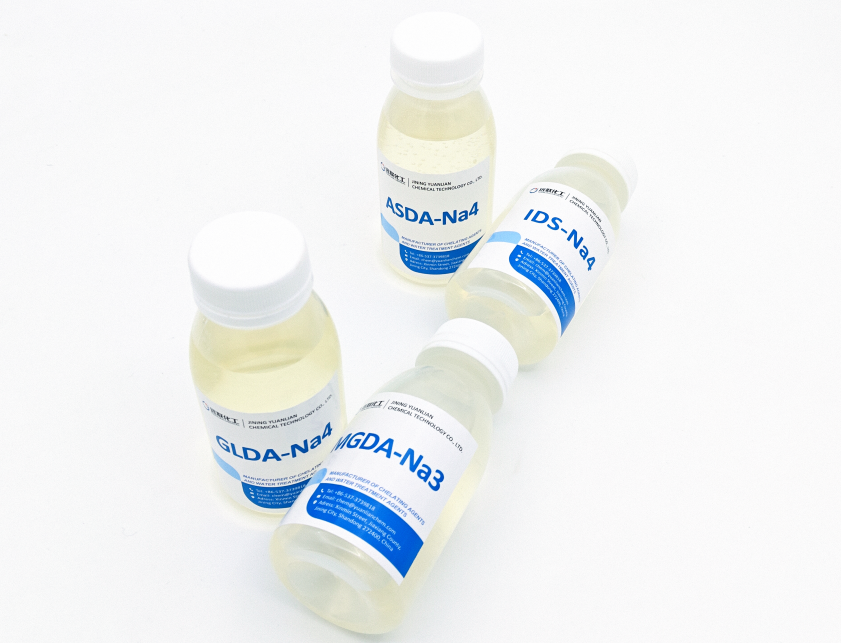
A biodegradable chelating agent is a molecule that binds metal ions such as calcium, magnesium and iron in solution, and then breaks down in the environment afterwards. GLDA (glutamic acid diacetic acid, CAS 51981-21-6 as the tetrasodium salt), MGDA (methylglycinediacetic acid, CAS 164462-16-2) and IDS (iminodisuccinic acid, CAS 144538-83-0) are the three most common examples. All three exceed 60 per cent degradation within 28 days under OECD 301 ready biodegradability testing.
A serious supplier should send you four documents before you ask twice:
- A certificate of analysis (CoA) for the current batch, with assay, pH, chloride, iron and heavy metal figures
- A safety data sheet (SDS) in the language of your market
- A technical data sheet (TDS) covering solubility, pH range and recommended dosage
- A statement of origin and, where relevant, REACH or other registration evidence
If a supplier hesitates on any of these, treat it as a signal. Documentation is the cheapest thing a manufacturer produces. If the paperwork is disorganised, the production line usually is too.
What ISO 9001 Actually Tells You
ISO 9001 certification is common in the chemical industry, and that is exactly why it matters less than people think. The certificate proves that a quality management system exists and is audited. It does not prove the product is good.
The useful question is narrower: what does the system control? Ask how the manufacturer checks each batch, which parameters appear on the CoA, and whether that CoA comes from actual testing or from a template. It sounds like a rude question. It is a fair one. In this market you will occasionally find suppliers that print the same figures on every certificate and change only the batch number.
Look for evidence of real laboratory work instead. Yuanlian Chemical, the Shandong-based manufacturer behind this site, runs its own testing laboratory, verifies every production batch against written specifications, and issues CoAs that name the test methods used. That level of detail is what you want to see, whichever supplier you finally choose.
Batch-to-Batch Consistency Is the Real Test
A single good batch proves nothing. Chelating agents are dosed into formulations at a few per cent, and small swings in assay or pH can push a finished product out of specification. Colour matters too, especially in personal care and clear liquid detergents.
Ask the supplier for the last three CoAs for the same product grade, not just the latest one. Compare the assay spread across them. A well-run plant holds active content within a tight band, batch after batch. You can also ask about production scale. A manufacturer that runs multi-tonne batches under one documented procedure gives you fewer surprises than one that switches between small campaigns on different lines.
Supply Security: Capacity, Lead Time and Minimum Orders
European buyers sourcing biodegradable chelating agents from Asia need to look at three numbers.
- Annual capacity. This tells you whether the plant can absorb your growth without compromising existing customers. Yuanlian Chemical operates at an annual capacity of more than 12,000 tonnes across its chelator production lines.
- Lead time. Two to four weeks for standard grades is reasonable. Anything longer suggests scheduling problems that will eventually become your problems.
- Minimum order quantity. One tonne or less is normal for a first trial order. A supplier that insists on a full container from day one is making you carry their inventory risk.
One practical tip: order a trial batch before committing to a contract grade, and run it through a real production batch, not just a lab test. The results will tell you more than any document.
Technical Support During Reformulation
Switching from EDTA to a biodegradable chelator usually means changing more than one ingredient. The dose may shift, the pH optimum may move, and the interaction with other builders changes. A supplier that sells powder and then goes quiet is a distributor, not a partner.
Ask what happens when you hit a problem. Is there a technical contact who answers within a day? Will the supplier run compatibility tests on your formula, or at least share comparative data from similar cases? Yuanlian Chemical keeps a technical team that works with formulators on dosage and compatibility questions, and publishes comparative performance data for its GLDA, MGDA and IDS grades. Treat reformulation as a joint project, and choose a supplier who treats it the same way.
Verifying the Green Claims
Biodegradability is the reason most buyers switch to these products, so it deserves the same scrutiny as quality. The claims should rest on test reports, not marketing language.
- Ready biodegradability should be evidenced by OECD 301B or 301F test results, ideally from an independent laboratory.
- In the EU, the new Green Claims rules require environmental claims to be substantiated. A manufacturer should be able to hand you the underlying test report, not a one-line brochure promise.
- Feedstock matters to some buyers. GLDA is produced from L-glutamic acid and MGDA from alanine, both plant-derived. If you plan to advertise that, make sure the supply chain is documented.
Red Flags That Should End a Conversation
Some responses should stop the evaluation there and then:
- A CoA with no test methods, or a refusal to share historical CoAs
- An SDS in English only, when you sell into non-English-speaking markets
- Vague answers about capacity, origin or registration status
- A salesperson who promises "anything you need" without asking what you make
Each of these is a small window into how the supplier would behave after the contract is signed.
The Shortlist
When you compare final quotes, weigh four things in this order: documented quality, batch consistency, supply security and technical support. Price comes fifth. A five per cent saving on the raw material means nothing if the batch fails and your production line stops.
Frequently Asked Questions
What is a biodegradable chelating agent?
A biodegradable chelating agent is a molecule that binds metal ions in solution to prevent scale, haze or staining, and that degrades in the environment after use. GLDA, MGDA and IDS are the most widely used examples, all exceeding 60 per cent degradation within 28 days under OECD 301 testing.
How do I verify a supplier's quality claims?
Ask for the last three certificates of analysis for the same product grade and compare the assay spread. Confirm that the CoA is based on actual per-batch testing, and check the ISO 9001 certificate with the certifying body rather than taking it at face value.
What should a first trial order include?
One tonne of the exact grade you plan to use, a current CoA, an SDS in your market's language, and a written commitment to a lead time. Then test it in a full-scale production run, not just in the laboratory.
Yuanlian Chemical specializes in the production of polyaspartic acid (PASP),tetrasodium iminodisuccinate(IDS), GLDA, MGDA etc. with stable quality and excellent quantity!

Contact us